

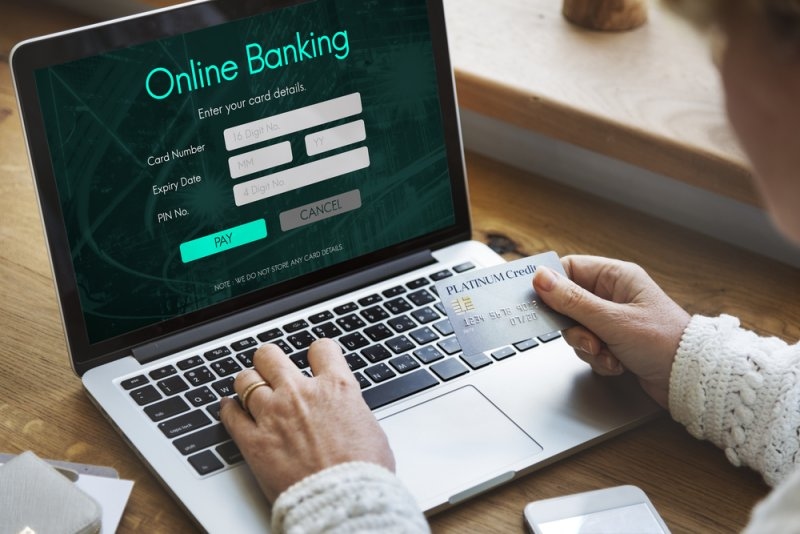
An online account might manage every dollar for me at the lowest price. Checking account transactions, paying your bills, and transferring your funds have all been digitized due to a Digital and Mobile Account, which provides people with many new and convenient ways of handling all of their everyday needs.
Online banking is a service that allows you to manage your bank accounts from a Web page or a dedicated application. Your current bank, a credit union, or an online-only bank can offer you online banking. With digital banking, you can generally access your accounts 24 hours a day, but occasionally your bank's website may undergo routine maintenance or may experience technical difficulties that will disrupt your access.
Internet banking can offer various everyday services, such as checking balances and transaction history, transferring funds between your accounts, sending money to other people, paying bills online, or downloading bank statements for savings. Depending on the financial provider, online banking can also give you access to budgeting tools, account alerts, savings features, mobile deposits, and more.
You generally need an account with a bank to use the Internet Banking services. After registering, you then have the opportunity to log in with your bank account's specific password and a second security challenge to access its online accounts.
Digital banking can take place using a computer, tablet, or smartphone, whereas mobile banking is primarily associated with use from a smartphone or a tablet. You have the option to create accounts with a purely online bank, as such institutions will not normally have a branch.
Online banking allows many of the same tasks that you once would have needed to perform at a branch. The range of services available varies by bank, but normally consists of:
Your Internet account can be a valuable tool for managing your money. By frequently reviewing your transaction history, you can easily spot any unfamiliar or unauthorized withdrawals that might indicate a compromised account.
Convenience is among the biggest factors why most people use online banking. You don't need to wait for your bank to open to manage certain aspects of your finances. This convenience is especially helpful when you need to quickly check your balance, pay bills, or transfer funds from your account when a branch trip is inconvenient or impossible.
Some possible benefits are:
An online account also likely carries fewer fees or a more competitive annual percentage yield depending on the institution. Although rates can change, most online-only institutions have reduced costs related to brick-and-mortar facilities and can pass those savings on to the consumer.
These two terms are similar, but the difference is that online banking typically applies to using a bank's website from a computer, and mobile banking relates to banking via a dedicated application from a smartphone or tablet. Mobile banking is ideally useful for quickly checking balances or making small transfers. Detailed statements or multiple accounts are easier to manage through a bank's website.
Digital banking, on the other hand, is a broad category that can also incorporate things like electronic transfers and e-payments, among others. Use whichever term makes sense to you; however, customers should never go into opening an account without checking what the actual services are beyond the wording. Always compare account features at any branch, ATM, website, and the mobile app of any bank before selecting an online bank account.
When you and your financial institution use appropriate security measures, an online bank account is typically safe. There's always risk, of course, and you may encounter fraudulent websites, phishing, and stolen passwords on occasion, but there are a couple of things you should know to help an online bank account remain secure.
To enhance online security, remember to:
American Express offers the following tips to register a customer for online banking: use secure passwords, have two-step verification to enroll in security services, and do not log in through public Wi-Fi.
Online banking services are very convenient but will not be enough for everyone. Because he/she needs to withdraw cash through an ATM or enter a branch.
Consider if you often handle cash, if you prefer in-person assistance with your finances, or if you need other complex banking functions before you make the move.
Opening an online bank account is not only a matter of picking one with a pretty interface, so to speak, in its mobile app. Here, learn what to consider when opening an online account with a financial institution:
Think about how you utilize your bank account regularly, especially if you still primarily handle your money through the branch. People who only handle money digitally could opt for an all-online, brick-and-mortar-less institution, while folks who commonly work with cash and would prefer in-person service might need to choose a financial institution with a nearby branch.
Although online banking cannot fully replace visits to a physical bank branch, its ability to access the same services at your fingertips (pay bills, make payments, transfer funds, view account balances and history) means regular money matters have become far less time-consuming.
With a carefully considered account choice and safe security practices when accessing your funds digitally, the online environment has a huge role to play in simplifying and improving financial management.
A lot of banking facilities have accounts for which you'll be able to opt for online applications. Your identity proof, your own data, and potentially a preliminary deposit might also need to be established for some accounts.
Your money is usually accessible by way of net banking without cost with an account. However, some net finance offerings do incur a fee. Typical costs involve overdue cash on consumer balances, wire transfers, and atm withdrawal away from the bank network. Check charge schedules provided by each financial institution to stay on top of the game.
Based on your account's characteristics, internet deposits are a possibility at some banks. Some use in-network banks or retail websites, although you won't be capable of utilizing net deposits for other financial institutions; do a little preliminary searching for options.
Online banking may also boost your financial position, as the features that support savings account growth are many and varied, with transaction tracing, budget monitoring, and alerts that facilitate automatic transfers and targeted budget savings; but capabilities are, to some extent, varying from provider to provider.
Get in contact with your bank immediately and follow the organization’s guide to report financial scams and also security issues, then follow the required protocol. Adjust passwords, enable different safety methods available on the bank’s website, and look over current buying and selling and withdrawal transaction records carefully for unusual activity so as to perhaps lessen your current losses and harm.
This content was created by AI